How should I document a shoulder dystocia at home so the record holds up later?
Maneuvers, timing, personnel, and newborn response all have to be reconstructable from the chart. A step by step documentation checklist to complete before you leave the house.
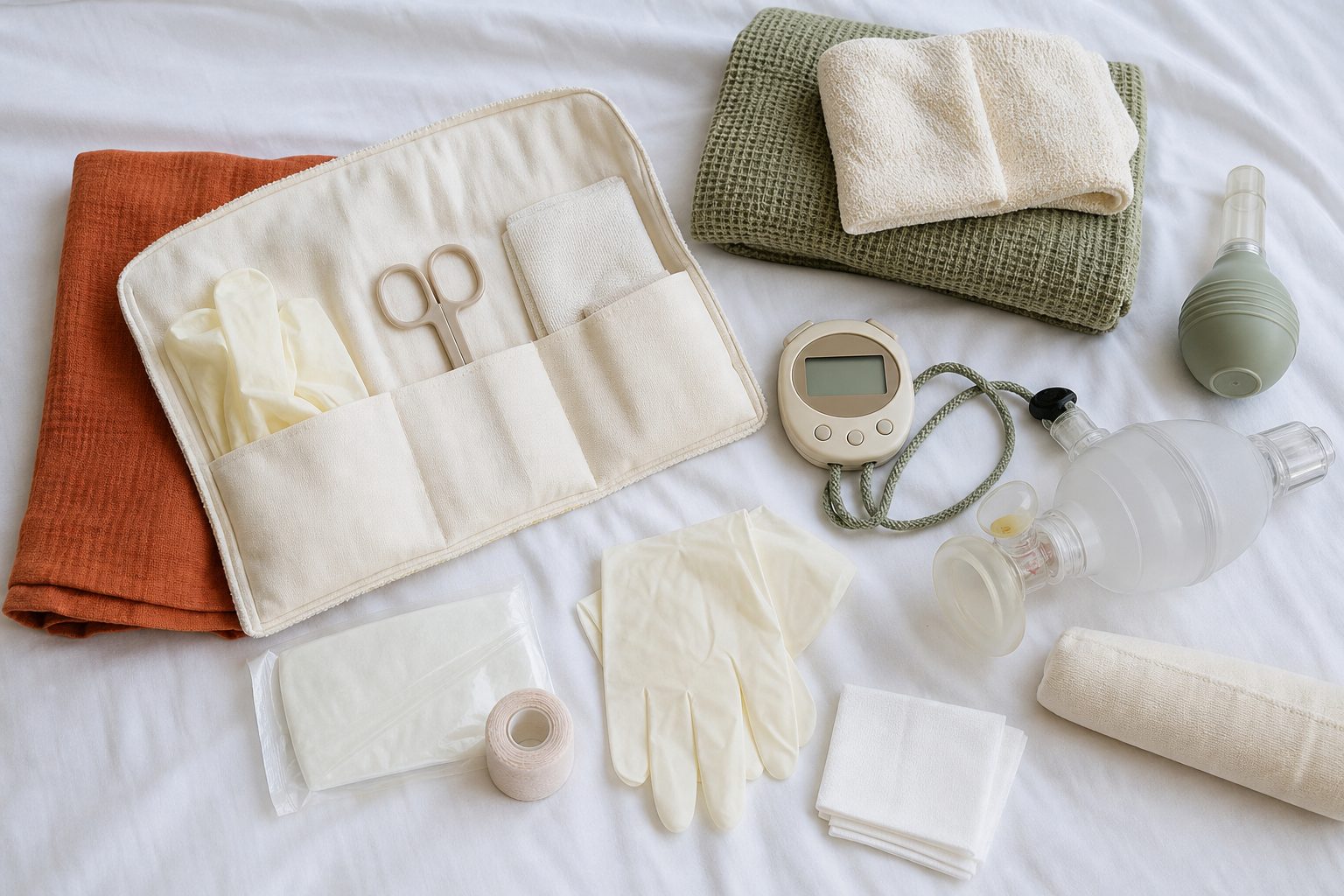
Document it so a stranger reading the chart two years from now can reconstruct the event minute by minute without asking you a single question. That means a head to body interval in clock time, every maneuver named in the order performed with who performed it, who was in the room and when each person arrived, what the baby did and what you did about it, and what you told the parents afterward. Narrative prose alone will not survive that reading. A timed sequence will.
The reason is simple. Shoulder dystocia is the event most likely to be reviewed later, whether by a pediatric neurologist evaluating a brachial plexus injury, a hospital team receiving a newborn, your board, or an attorney. Every one of them reads for the same thing: was the response prompt, ordered, and proportionate. Your chart either shows that or it does not, and memory fills gaps badly after a week.
The good news is that this is a solvable problem with a fixed checklist. Below is what to capture, split into what you record in the room and what you complete before you leave the house.
What to capture in the moment versus immediately after
In the moment, you are hands on. Someone else is the recorder, and that role should be assigned before anything goes wrong, at the same point you assign who calls 911 and who watches other children.
The in the moment list is deliberately tiny, four items, because anything longer will not get written.
- Clock time the head was born.
- Each maneuver called out, in order, with the time.
- Clock time the body was born.
- Clock time of any call placed for transport or additional help.
Everything else goes in the second pass, before you leave. That pass should happen while the parents are settled and the baby is stable, at the kitchen table, not in the car and not tomorrow. Two hours of delay is enough to lose maneuver order.
Why the recorder role matters more than the paper
The person recording should say the time out loud as she writes it. That does two things: it timestamps accurately, and it gives you an auditory count of elapsed time while both of your hands are busy. A birth assistant calling "sixty seconds, McRoberts at 03:14" is doing clinical work, not clerical work.
Keep reading: What changed for my practice the year I opened a licensed birth center instead?
Time of head birth and time of body birth
Record both as actual clock times, not as an interval. Write 03:12 and 03:16, and let the interval be derived. Intervals written from memory drift toward round numbers, and a chart that says "approximately four minutes" is weaker than one that says 03:12 to 03:16.
Use one clock for the whole event and name it. If the recorder used her phone and the newborn resuscitation timer started separately, note that, because two devices will disagree by a minute and someone will notice.
If the head birth time is genuinely uncertain because the dystocia was recognized after the fact, say so plainly and say what you do know: "Head born at approximately 03:12, time noted retrospectively; restitution absent, turtle sign observed." An honest limitation documented at the time reads as care. A precise number invented later reads as something else.
Maneuvers in the order performed, with who performed them
Order and attribution are the two things reviewers look for first. Record each maneuver as a line with four fields: time, maneuver, performed by, result.
| Time | Maneuver | By | Result |
|---|---|---|---|
| 03:12 | Head born, turtle sign, no restitution | Midwife | Dystocia called aloud |
| 03:13 | McRoberts, both legs hyperflexed | Partner and doula at thighs | No descent |
| 03:13 | Suprapubic pressure, left side, steady then rocking | Birth assistant | No descent |
| 03:14 | Gaskin maneuver, hands and knees | Client, assisted | No descent |
| 03:15 | Posterior arm delivered, right | Midwife | Shoulders released |
| 03:16 | Body born | Midwife | Infant to warmed surface |
Name maneuvers precisely. "Suprapubic pressure" is a maneuver; "pushing on the belly" is not. Specify the side for suprapubic pressure and the arm delivered for posterior arm release. If you attempted a maneuver and abandoned it, record the attempt and that it was abandoned, with why. Attempts that are omitted look like they did not happen, and a chart with a two minute gap invites the reader to fill it themselves.
Traction, position changes, and episiotomy decisions
Describe traction in your own clinical terms and be specific about direction and character: axial, gentle, applied during maternal effort. Note explicitly if no fundal pressure was applied, because that is the single question most likely to be asked and a silent chart is not an answer.
Position changes deserve their own timestamps even when they are not named maneuvers: to the edge of the bed, to hands and knees, to a lateral position with the upper leg supported. Each one is a clinical decision and each one shows a systematic response rather than repetition.
If you performed an episiotomy, record the time, the indication, the type, the anesthesia if any, and who performed it. If you considered one and did not, record that too, with the reason: "Episiotomy considered, not performed; adequate posterior access without incision." Documented restraint is a clinical judgment. Undocumented restraint is invisible.
Keep reading: Is the shift toward licensed midwifery in more states going to change my rates?
Personnel present and when each arrived
List every adult in the room with role and arrival time, including the client's partner, family members, a doula, a student, and any EMS crew. If someone was in the house but not in the room, say so. If you called your backup at 03:13 and she arrived at 03:31, both times belong in the record even though the baby was born before she got there, because the call itself documents your judgment.
Also record who left. A student who stepped out to call for transport is not available for a maneuver, and the staffing picture at 03:15 may not be the one at 03:12.
Newborn condition, resuscitation steps, and Apgar timing
Newborn documentation should stand on its own, because it is often the section extracted and sent to a receiving pediatric team.
- Condition at birth: tone, color, respiratory effort, heart rate, spontaneous movement of each arm.
- Apgar at one, five, and if either is under seven, at ten minutes, with the component scores, not just the total.
- Every resuscitation step with its clock time: stimulation, positioning, suction if performed, positive pressure ventilation start and stop, chest compressions, oxygen use and concentration.
- Response to each step, in the same line.
- Cord management: time of clamping, whether cord blood gases were obtained, whether the cord was intact during initial steps.
- Newborn exam findings, with specific attention to clavicles, humerus, and arm movement bilaterally, including grasp and Moro symmetry.
- Feeding and vital signs before you left, with times.
If arm movement is asymmetric, document what you observed rather than a diagnosis: "Reduced spontaneous movement left arm, arm held adducted and internally rotated, grasp present." Then document the referral: who you called, when, and what plan the parents agreed to. The referral time matters as much as the finding.
See how MidwifeLedger handles this for community midwifery
Maternal assessment and perineal findings
The mother's record is the one most often thin after a dystocia, because attention followed the baby. Complete it before you leave.
Document estimated blood loss with your method, uterine tone, fundal position, and any uterotonic given with dose, route, and time. Then the perineum: degree of any laceration, extension, whether the anal sphincter was assessed and by what method, repair performed with suture type and technique, and anesthesia used.
Add a bladder note. Voiding time after birth, and whether catheterization was needed. And record what you told her about signs to watch for, because postpartum hemorrhage risk is elevated after an operative or manipulated birth and the instruction given is part of the care.
Debrief notes and parent communication record
Debrief twice: once at the kitchen table before you leave, and once at the day one or week one visit. Document both.
The immediate debrief note should record what you told the parents happened, in the words you used, what you told them to watch for in the baby's arm and in the mother, what follow up you arranged, and their questions. Note who was present. If you recommended a pediatric evaluation within a specific timeframe, write the timeframe.
The later debrief matters clinically and relationally. Parents commonly remember a dystocia as longer and more chaotic than the timed record shows, and walking them through the sequence, minute by minute, is genuinely therapeutic. It also surfaces misunderstandings while they are still small.
Finally, write your own reflective note separately from the clinical record if your state and carrier allow it, and understand that separate does not always mean privileged. Ask your carrier before you assume.
The checklist before you close the bag
Before you leave the house, confirm you have: two clock times for head and body, every maneuver with time and performer, personnel with arrival times, newborn condition and full resuscitation timeline, component Apgars, bilateral arm movement, maternal blood loss and perineal findings, referral made with time, and the parent conversation. Nine items. If any is missing, you are still working.
That is a lot to assemble by hand at three in the morning. MidwifeLedger is built so it is not: the event fields are structured and timestamped as you enter them, the record carries forward from the prenatal chart you already completed once, and the one page hospital transfer summary generates from what you wrote, printed and in your hand in under a minute for the pediatric team or the receiving unit.
Read also

What changed for my practice the year I opened a licensed birth center instead?
Moving from home visits to a licensed facility adds building code, staffing rules, and accreditation to the workload. A close look at what shifts and what stays the same.

Is the shift toward licensed midwifery in more states going to change my rates?
New licensure pathways, Medicaid coverage decisions, and payer credentialing shift what a community midwife can charge. What the direction of travel means for pricing.

What does a postpartum hemorrhage at home really demand from a two person team?
Roles, medication sequence, quantified blood loss, and the transfer decision all compress into minutes. A ground level account of how the work divides between midwife and assistant.